
Most people who start researching nervous system regulation end up in the same rabbit hole: breathwork, cold plunges, vagus nerve exercises, magnesium, sleep tracking. These are good things. None of them are wrong. But most people who chase these strategies for months still feel like their body is stuck in a low-grade state of stress and they can’t quite figure out why.
The answer, more often than not, is structural. And that’s where chiropractic care comes in, not as a nice bonus to the wellness stack, but as the starting point.
What Your Nervous System Is Actually Doing
Your nervous system is the communication network that runs your entire body. It tells your heart when to beat faster, your lungs when to breathe deeper, your digestive system when to slow down, and your muscles when to tighten up. Every single process that keeps you alive and functioning runs through it.
There are two primary modes: the sympathetic nervous system, which activates under perceived threat and gets your body ready to fight or flee, and the parasympathetic nervous system, which handles recovery, digestion, rest, and repair. A healthy, regulated nervous system moves fluidly between the two. You respond to stress, and then you come back down. That’s how it’s designed to work.
When you’re chronically stuck in sympathetic mode, the system never fully resets. Sleep suffers. Digestion slows. Anxiety runs in the background. Healing takes longer. And no amount of deep breathing fully fixes it if the root problem is still there.
Where the Spine Comes In
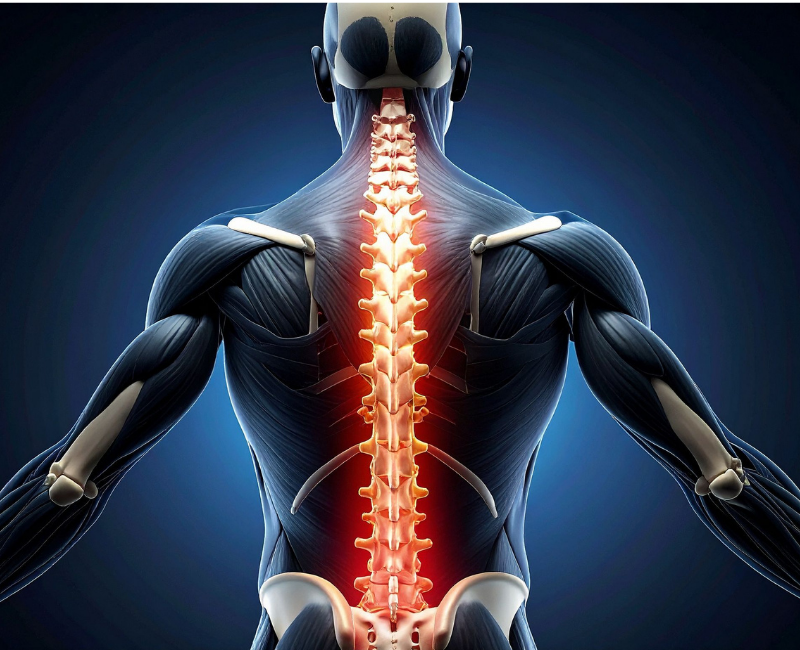
Here’s what a lot of wellness content leaves out: your spinal column is not just a stack of bones. It’s the primary protective structure for your spinal cord, which is the main highway for every signal your nervous system sends and receives. The brain communicates with the rest of your body through that cord, and then through the nerves that branch out between each vertebra.
When a vertebra shifts out of its proper position, which chiropractors call a subluxation, it creates interference in that communication pathway. The signal going from your brain to your organs, muscles, and tissues gets disrupted. The signal coming back to the brain gets disrupted too. Your nervous system is essentially trying to regulate a body it can’t fully hear.
This isn’t theoretical. Spinal subluxations create mechanical stress on the nervous tissue around them, triggering a low-level stress response in the body that keeps the sympathetic system activated even when there’s no external threat. Your body reads the interference as a problem and stays on alert.
Why an Adjustment Works Where Other Strategies Can’t
A chiropractic adjustment restores the proper position and motion of the vertebrae, removing that interference. When the correction happens, the nervous system gets accurate input again. The mechanical stress is relieved. And in many cases, you can measure an immediate shift: heart rate variability improves, cortisol levels drop, and the body moves toward the parasympathetic state it was trying to reach.
Breathwork can activate your vagus nerve. Cold exposure can trigger a parasympathetic rebound. Meditation can slow your heart rate. All of these work with the nervous system. But they’re working downstream of the problem. If your spine is interfering with the signals those strategies are trying to produce, you’re getting a fraction of the benefit.
Think of it like trying to stream a movie on a damaged router. You can upgrade your subscription, get a better device, and move closer to the router. But until you fix the hardware, the signal is going to keep cutting out.
What This Means for Your Health
Nervous system regulation isn’t a single technique. It’s a state your body returns to when the conditions are right. Chiropractic care creates those conditions at the structural level, which is the level that every other strategy depends on.
Patients at Radix Chiropractic often report changes they weren’t expecting: better sleep after the first few adjustments, less tension they had accepted as normal, a general sense of calm that wasn’t there before. These aren’t side effects. They’re the nervous system doing its job once the interference is removed.
If you’ve been building a wellness routine and feel like something is still missing, it might not be the routine. It might be the foundation.